By Brian S. Brijbag, Esq.
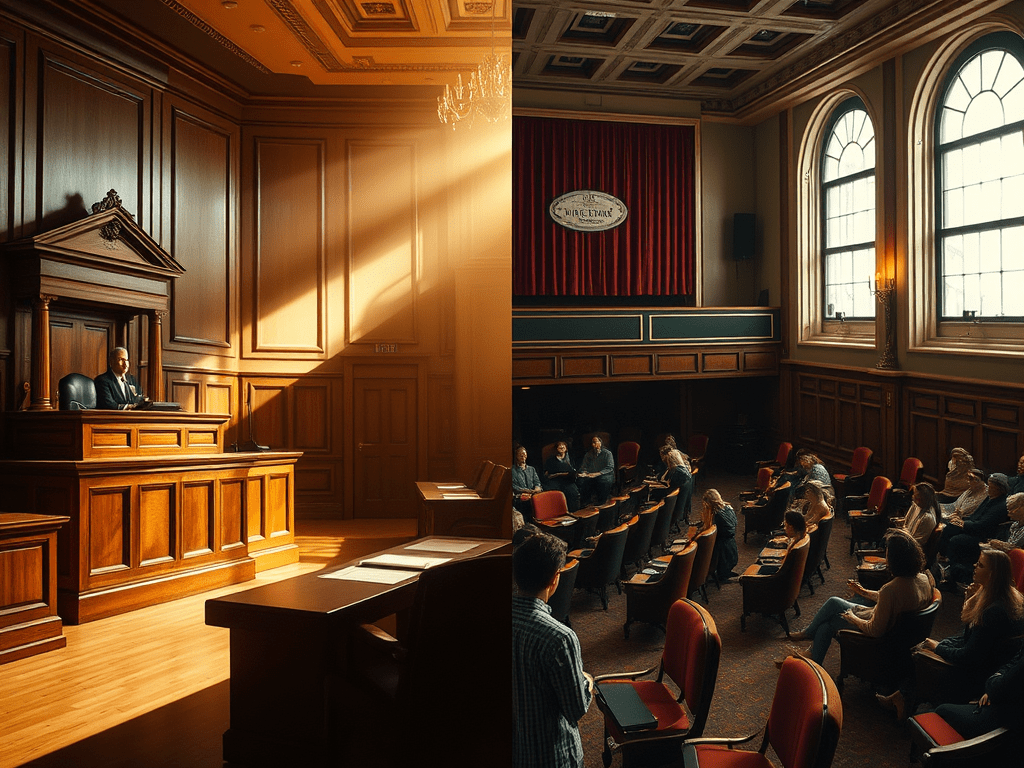
The law and the stage may seem like opposing worlds: one rooted in procedure, the other in emotion. But I’ve come to realize they are two different languages for saying the same thing:
“I see you.”
“You matter.”
“Let me tell your story.”
And in both, I’ve found my purpose: giving voice to the unheard.
⚖️ Pro Bono: The Law That Listens
There’s a weight in the stories people bring into a legal office — especially those who can’t afford to tell them anywhere else.
- The single mother being sued over a medical bill she shouldn’t have had to begin with.
- The family fighting to keep services for their child with autism as he ages out of public school protections.
- The immigrant worker injured on the job, terrified of what speaking up might cost him.
When I take a pro bono case, it’s rarely about the legal puzzle. It’s about presence. About saying:
You may not have money. You may not have power.
But today, you have me.
And I will speak — loudly, clearly, and strategically — on your behalf.
Pro bono work isn’t charity. It’s justice unpaid. It’s the soul of the profession when no one’s billing the hour.
🎭 Playwriting: The Art of Being Heard Without Permission
Then, there’s the other room I enter — the rehearsal hall, the dark theatre, the blank page.
I’ve written plays about:
- Grieving a God who may never have existed
- Arguing over the last piece of key lime pie during a hurricane
- A shoeshiner and a businessman on the Staten Island Ferry debating purpose, time, and stillness
These aren’t “issue plays.” They’re human plays. But each one carries the DNA of someone I’ve met in the courtroom, in the community, or in the echo chamber of my own reflection.
Because playwriting is pro bono for the soul.
You don’t have to meet income guidelines to be hurting.
You don’t need a docket number to be unheard.
And sometimes, the loudest cries come from characters who don’t even exist — but feel everything we do.
🧠 Why Both Matter
In the courtroom, I represent clients.
On the stage, I represent truths.
- Pro bono speaks to systems.
- Playwriting speaks to hearts.
- Both demand listening.
- Both require radical empathy.
- Both ask: How do I translate suffering into something actionable?
Whether it’s filing a motion or writing a monologue, the process is the same:
Take the pain. Give it form. Speak it back to the world with clarity and courage.
🌱 A Real Example: Project Hope
With the Brijbag Family Foundation, we launched Project Hope — a program offering pro bono legal services to families with children on the autism spectrum, particularly as they transition into adulthood.
Why? Because the system doesn’t make sense. Services disappear at 18. Guardianship, housing, benefits — they’re complicated, expensive, overwhelming.
So we step in.
And while I’m helping one family file for guardianship, I’m also writing a play about a mother and son trying to hold a conversation in a world that doesn’t know how to listen to either of them.
It’s the same work. Just a different stage.
✍️ The Power of Storytelling — In Court and On Stage
When you strip it all down, both lawyers and playwrights are storytellers.
We build narrative. We arrange facts.
We try to move people — judges, jurors, audiences — from one emotional state to another.
- A well-timed pause in cross-examination can land like a dramatic beat.
- A closing argument can become a monologue.
- And a well-crafted play can make an entire room of strangers feel something for someone they’ve never met.
That’s power. And if you’ve ever felt powerless, you know how sacred that is.
💬 Final Thought: Speak When You Can. Amplify When You Can’t.
Not everyone can afford a lawyer.
Not everyone has the words to tell their story.
Not everyone is given the mic.
That’s why I do pro bono work.
That’s why I write plays.
Because silence isn’t always chosen.
And some voices need help being heard.
So I use what I have — law degrees, stagecraft, caffeine — to stand in that gap.
Because whether it’s before a judge or under a spotlight, we all deserve to be known.
If you’ve ever felt unheard — in court, in life, in art — I hope this space reminds you: you’re not alone. And your story matters.
 Brian Brijbag