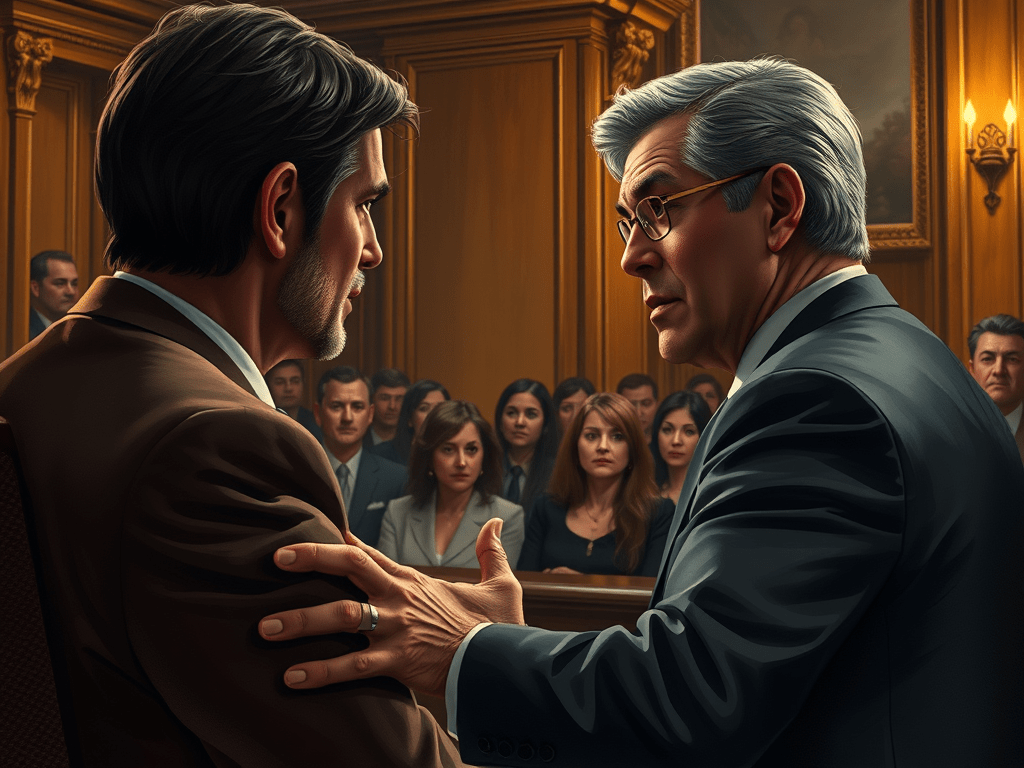
Why storytelling isn’t just useful in trial – it is the trial.
There’s a dangerous myth in law school – one whispered between hornbooks and caffeine fumes – that legal success lies in mastering facts, precedent, and procedure. As if law were a science of syllogisms. As if justice were a spreadsheet.
But ask any jury why they voted the way they did. It won’t be a citation to Palsgraf. It’ll be, “He reminded me of my brother.” Or “She didn’t look like someone who would lie.” Or “That story about the Christmas lights broke me.”
We are not creatures of logic. We are creatures of story.
And every client who walks into your office isn’t just a file number in slacks – they’re a protagonist. Sometimes tragic, sometimes comic, sometimes unreliable, always human. If you don’t know how to frame that humanity within a compelling narrative, you’re not just missing an edge – you’re missing the entire point.
The Courtroom as Theater
A trial is theater, whether you like it or not. The judge plays dramaturg, the jury plays audience, and counsel are clashing playwrights trying to pitch their script in real time. Your exhibits are props. Your witnesses, a cast. And your client?
Your client is the soul of the piece. The one the audience must believe in – even if they don’t like them. Especially if they don’t like them.
You are not just building a case. You are directing a drama. Which means that the way your client is perceived – their backstory, voice, demeanor, contradictions – isn’t peripheral. It is the case.
Building the Narrative Without Fictionalizing the Truth
Some attorneys confuse storytelling with performance. They embellish, overreach, or sand down their client’s edges. But storytelling in law is not fiction. It is architecture.
You are structuring the truth.
You are choosing what beats the jury hears. What arc the client travels. Where the turning points hit. Are they the David up against Goliath? The betrayed whistleblower? The hardworking father who made one imperfect choice?
And here’s the key: none of that is dishonest. It’s how humans understand truth. Chronologically? No. Emotionally? Always.
The Danger of Losing the Human
When we over-index on timelines and diagnostics and declarations, we lose the plot – literally. We drown the human in documentation. And then we’re shocked when the jury doesn’t connect.
Your client is not just a set of injuries, or unpaid bills, or a chain of causation. Your client is the person who still can’t climb stairs to tuck their daughter in. Who missed their son’s graduation because of back spasms. Who now hesitates before crossing the street.
These are not sympathy plays. They’re humanity anchors.
The job is not to exaggerate the suffering – it’s to make it legible.
Storytelling as a Form of Advocacy
Telling your client’s story well – honestly, compellingly, with emotional and factual coherence – is not fluff. It is strategy. Because people don’t weigh evidence in a vacuum. They weigh it in context. They ask themselves: do I believe this person? Do I care what happens to them?
Data without story is inert. But data wrapped in meaning? That’s a closing argument that lingers long after the lunch break.
The Final Scene
So the next time a client walks in – angry, scared, broken, hopeful – don’t start with the intake form. Start with the story.
Who are they? What do they want? What stands in their way?
And how, together, will you help them earn their third act redemption?
Because at the end of the trial, you won’t just have told a story.
You’ll have told the story.
The only one that mattered.
The one where your client mattered.
And maybe – just maybe – the jury believed it too.
 Brian Brijbag