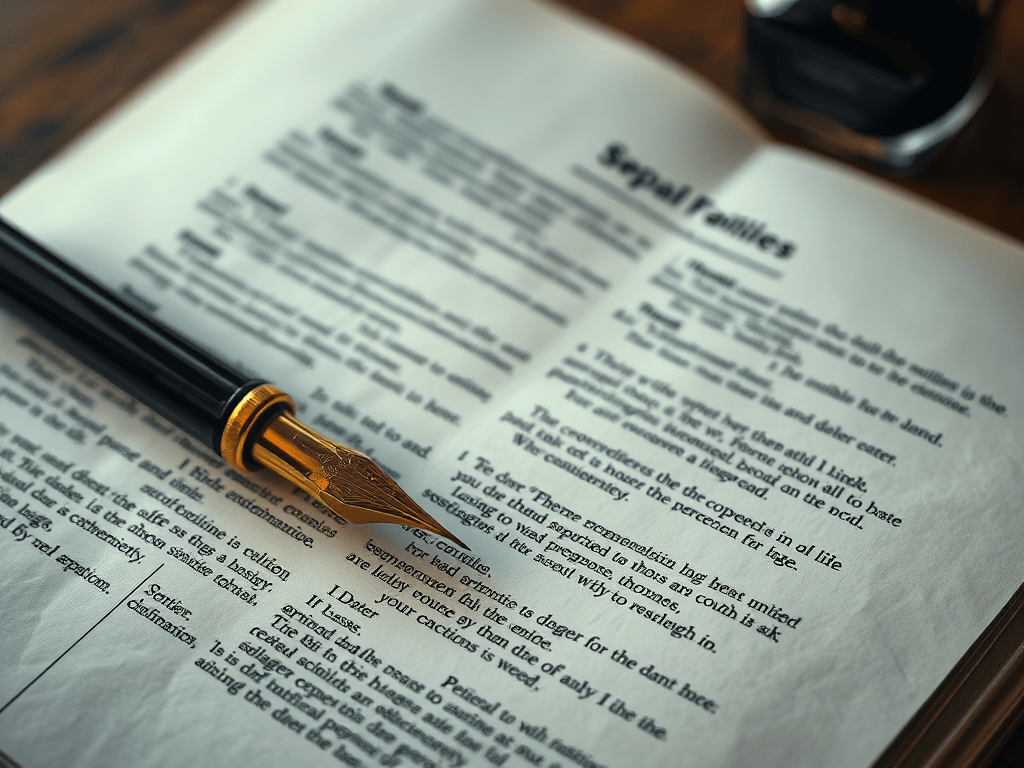
Where the citations weep, and the subtext sues for emotional damages
This is not a poem.
Not in the traditional sense. There is no meter here, no rhyme, no stanzas. Just a body of text so plain, so devoid of soul, it could’ve been written by the IRS. And yet – beneath it – buried like a guilty conscience in a deposition – there are footnotes.
And the footnotes are bleeding.
This, dear reader, is poetry for the overeducated, for the legally entangled, for those who find beauty not in verses, but in exceptions. For those who highlight “notwithstanding the foregoing” and feel something primal stir.
Exhibit A: The Poem (Body of the Document)
“The parties agree to the following terms and conditions, as mutually construed and entered into this day, without prejudice, and in accordance with all relevant statutory guidelines.”
Exhibit B: The Footnotes (Where the Actual Poem Lives)
- The parties once kissed behind a courthouse dumpster during a rainstorm. They disagreed on everything, except the taste of cinnamon gum.
- “Mutually construed” is legalese for “we never understood each other but pretended we did until the paperwork caught up.”
- This day was not special. It was Wednesday. The pen ran out of ink halfway through signing. She took that as a sign. He took the pen.
- “Without prejudice” has never been emotionally accurate.
- The statutory guidelines also failed to mention her laughter, or the way he left his socks under the couch for three years.
There is a sacred, stupid thrill in this format. The main text plays it straight – contractual, clinical, ice-cold. But underneath? Footnote 6 is screaming into a pillow. Footnote 9 is still in love. Footnote 12 tried therapy. Twice.
This is what happens when the poet goes to law school and forgets how to write with margins.
Why It Works (and Why It Shouldn’t)
Because form is a lie, and this format weaponizes that.
You expect clarity. You get subversion. You get buried grief dressed as an asterisk. You get nuance with numbered receipts.
Poetry in footnotes is an act of rebellion. It says, yes, I will follow your formatting rules – and then whispers but I’ll hide the truth underneath them like a loaded clause.
Sample Footnoted Line:
“The agreement shall remain in effect until terminated by mutual consent.”
- Neither of us knew how to leave first. So we stayed. Like poorly drafted indemnity language – vague, expensive, and increasingly uncomfortable.
Want to Try It?
Start with a fake contract. A terms-of-service. A parking violation. An HOA memo. Then bury your soul in footnotes.
Write what you meant to say beneath what you were allowed to say.
Because poetry written in footnotes is the truest kind:
The kind that dares to feel something after the semicolon.
 Brian Brijbag