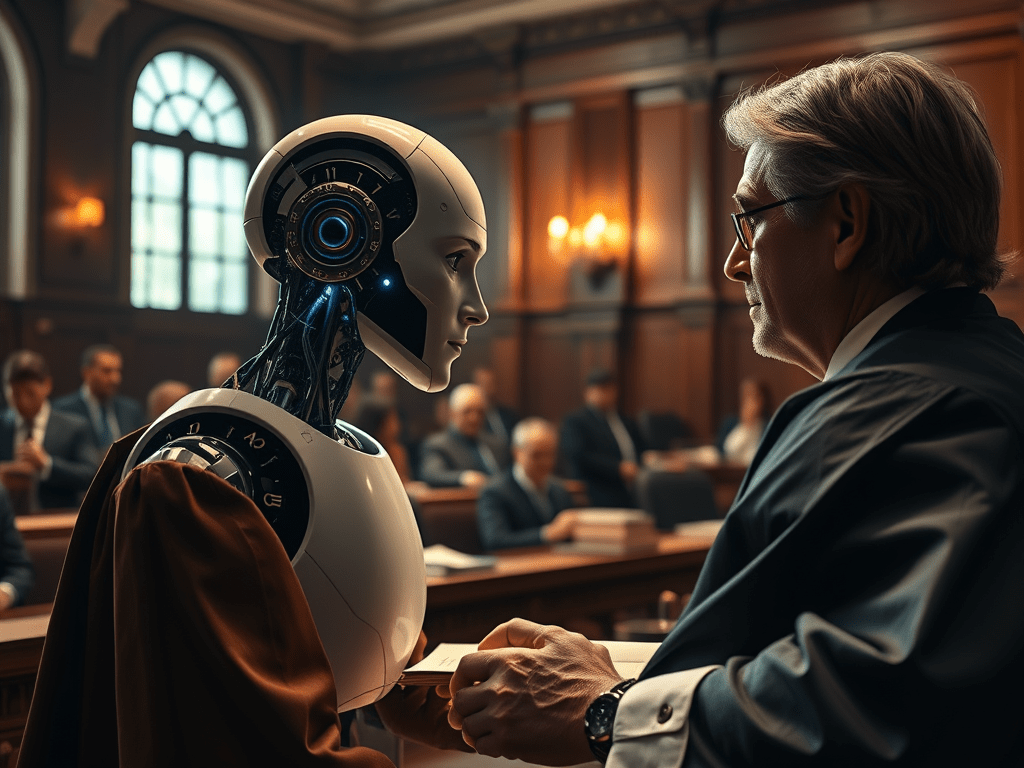
AI lawsuits are exploding right now.
Artificial intelligence has quietly moved from science fiction into everyday life. It writes emails, drafts contracts, answers medical questions, drives cars, recommends financial investments, and even generates news articles. But as AI systems become more powerful and more embedded in daily decision making, a serious legal question is starting to surface.
What happens when artificial intelligence causes harm?
If an AI system gives dangerous advice, crashes a car, spreads false information, or makes a decision that damages someone’s reputation or finances, who is responsible?
The answer is not simple. And courts around the world are only beginning to confront the issue.
The central problem is that AI itself cannot be sued. At least not under current law. Artificial intelligence is not a legal person. It cannot be held liable, cannot appear in court, and cannot pay damages.
That means responsibility must fall somewhere else.
The real legal question becomes who is behind the machine.
Several potential defendants could face liability when AI causes harm.
The developer
One possibility is the company or team that created the AI system. Developers design the algorithms, train the models, and determine how the system functions. If the system was designed negligently or released without adequate safeguards, developers could face product liability claims similar to those brought against manufacturers of defective products.
For example, if an AI program gives medical advice that causes injury because it was trained on unreliable data or lacked basic safety warnings, a plaintiff might argue that the developers failed to design the product responsibly.
The company using the AI
Another potential defendant is the company deploying the technology. Businesses increasingly rely on AI to make decisions about hiring, lending, customer service, and medical triage. If a company blindly relies on AI output without oversight, it may still be responsible for the consequences.
Courts often treat technology as a tool. If a business uses a tool carelessly and someone is harmed, the business can still be liable.
The user
In some cases, responsibility may fall on the individual using the system. If someone relies on AI advice in an unreasonable way or uses the technology to generate harmful content, the user could face liability.
For example, if a person publishes AI generated statements about someone that turn out to be defamatory, the person who shared the content may still be legally responsible.
The manufacturer
With physical AI systems such as autonomous vehicles or robots, manufacturers may also face liability. If a self driving car causes a crash due to a software failure, the case may resemble traditional product liability claims involving defective vehicles.
The key legal question becomes whether the product was reasonably safe when it left the manufacturer’s control.
Real world examples are already emerging.
AI hallucinations have produced false legal citations that lawyers unknowingly filed in court. AI generated images and videos have been used to spread false accusations online. Autonomous vehicles have been involved in fatal crashes that raise questions about whether the driver, the software developer, or the car manufacturer bears responsibility.
These situations illustrate a deeper problem. AI systems do not always behave predictably. They learn patterns rather than follow fixed instructions, which means their outputs can sometimes surprise even their creators.
That unpredictability challenges traditional legal frameworks built around human decision making.
Courts are now beginning to grapple with these questions. Regulators are debating new rules governing artificial intelligence. Legislatures around the world are considering laws that impose duties on developers and companies deploying AI systems.
In the meantime, the law is adapting in real time.
The most likely outcome is that courts will treat AI much like any other technology. The machine itself will not be responsible. Instead, liability will flow to the humans and companies who design, deploy, or misuse it.
Artificial intelligence may feel autonomous, but legally it is still someone’s tool.
And when that tool causes harm, someone behind it will almost certainly be answering questions in court.
About the Author
Brian S. Brijbag, Esq. is the founder of Brijbag Law in Spring Hill, Florida. Through the Chaos and Craft blog, he explores the strange intersection of law, technology, culture, and the unexpected legal problems that arise when new ideas collide with old rules.
 Brian Brijbag