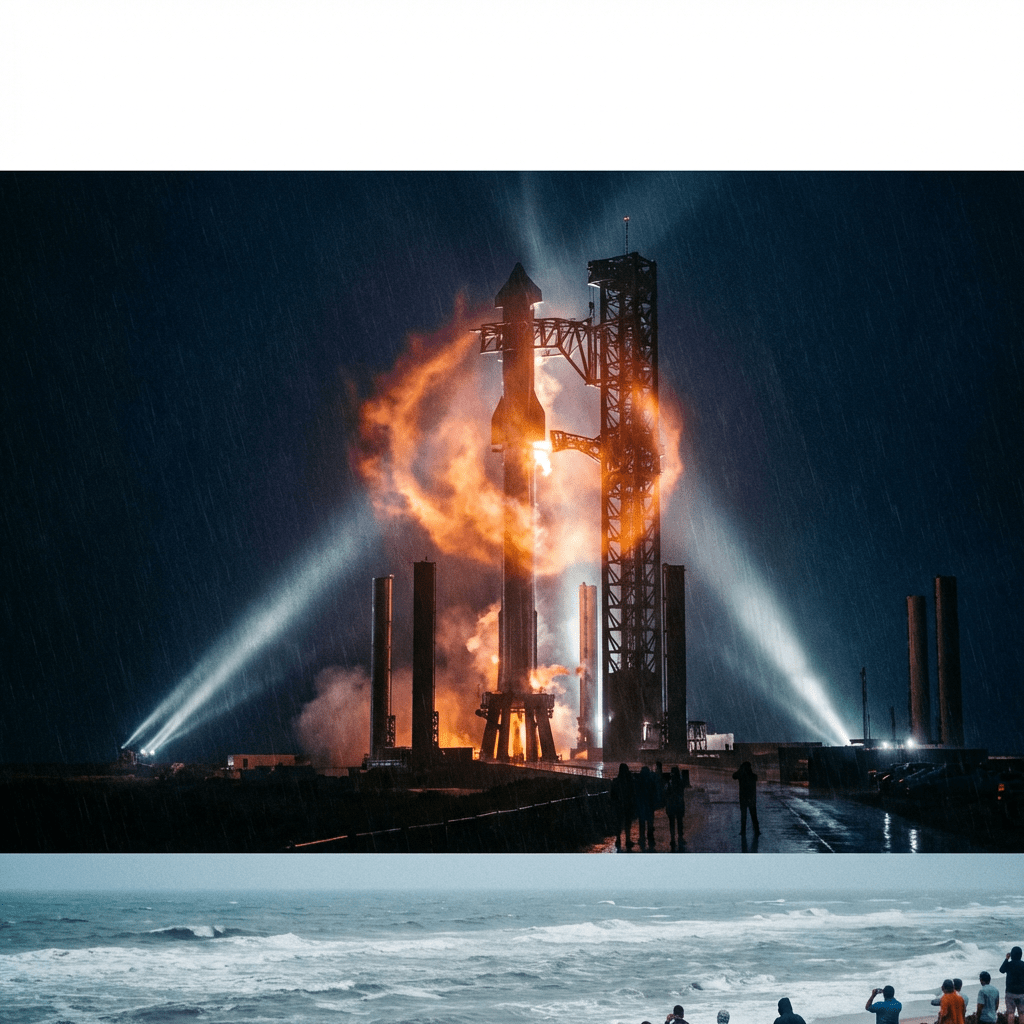
There are launches, and then there are moments that feel like a page turning.
The upcoming Artemis II is not just another mission. It is the first time in more than fifty years that humans will travel around the Moon and come home. The last time that happened was during Apollo 17. Since then, the Moon has been quiet. Present. Visible. Untouched by human footsteps or human orbit.
That changes now.
What Artemis II Actually Is
At its core, Artemis II is a crewed test flight.
But that description undersells it.
Four astronauts will launch aboard NASA’s most powerful rocket, the Space Launch System, inside the Orion spacecraft. They will travel beyond low Earth orbit, loop around the Moon, and return to Earth.
No landing. No moonwalk.
Just the trip.
And that is exactly why it matters.
This is the proving ground. The moment where everything that has been designed, tested, delayed, and debated finally has to work with people on board.
Why This Launch Feels Different
We have launches all the time now.
Commercial rockets. Satellite deployments. Private missions.
But Artemis II hits something deeper.
Because it is not about going up.
It is about going away.
Low Earth orbit still feels close. Familiar. Almost like an extension of home. But the Moon is different. The distance is real. The silence is real. The margin for error becomes something you can feel.
This mission reintroduces risk in a way that modern spaceflight has largely abstracted.
And with that risk comes meaning.
The First Return to Deep Space
The Artemis program is NASA’s roadmap back to the Moon, but also beyond it. Artemis II is the first step that includes people.
The uncrewed Artemis I proved the hardware could survive the journey. Artemis II asks a harder question.
Can we?
The astronauts will experience something no human has in decades. They will see Earth shrink into the distance. They will move into a place where Earth is no longer the dominant presence in the sky.
And at some point, they will look out and see the Moon not as a symbol, but as a destination.
The Human Element
Technology gets the headlines. Rockets get the visuals.
But missions like this are about people.
Four individuals strapped to the top of controlled fire, trusting systems built over years, knowing that once they leave, there is no quick way back.
There is something deeply human about that.
Not reckless. Not nostalgic.
Deliberate.
We choose to do this again.
Why It Matters Now
It would be easy to ask why this matters in 2026. Why go back to the Moon when we have already been there?
Because this is not repetition. It is continuation.
The Artemis program is not trying to recreate the Apollo era. It is trying to build something sustainable. A presence. A pathway. A stepping stone to Mars and beyond.
Artemis II is the moment where that vision stops being theoretical.
It becomes real.
The Experience of Watching It
There is something uniquely powerful about watching a launch like this live.
You are not just watching a rocket leave Earth.
You are watching people leave Earth.
That distinction matters.
When the engines ignite, it is not just physics. It is commitment. Years of preparation collapsing into a single moment where everything either works or does not.
And when it does work, when the rocket clears the tower and begins its climb, there is a shared understanding.
We are doing this again.
What Comes After
Artemis II is not the end goal.
It leads directly into Artemis III, which aims to put humans back on the lunar surface for the first time in over half a century.
But without Artemis II, that does not happen.
You do not skip the step where people go the distance first. You do not bypass the moment where the systems prove themselves under real conditions.
This mission is the bridge.
Final Thought
Space exploration has always lived in a strange place between science and story.
We measure it in miles, fuel, and velocity.
But we feel it in something harder to quantify.
Possibility.
Artemis II is not just about returning to the Moon. It is about reminding ourselves that we still move forward. That exploration is not something we finished. It is something we continue.
And for a few days, as that spacecraft circles the Moon, we will all be a little farther from Earth than we were before.
Even if we never leave the ground.
 Brian Brijbag